




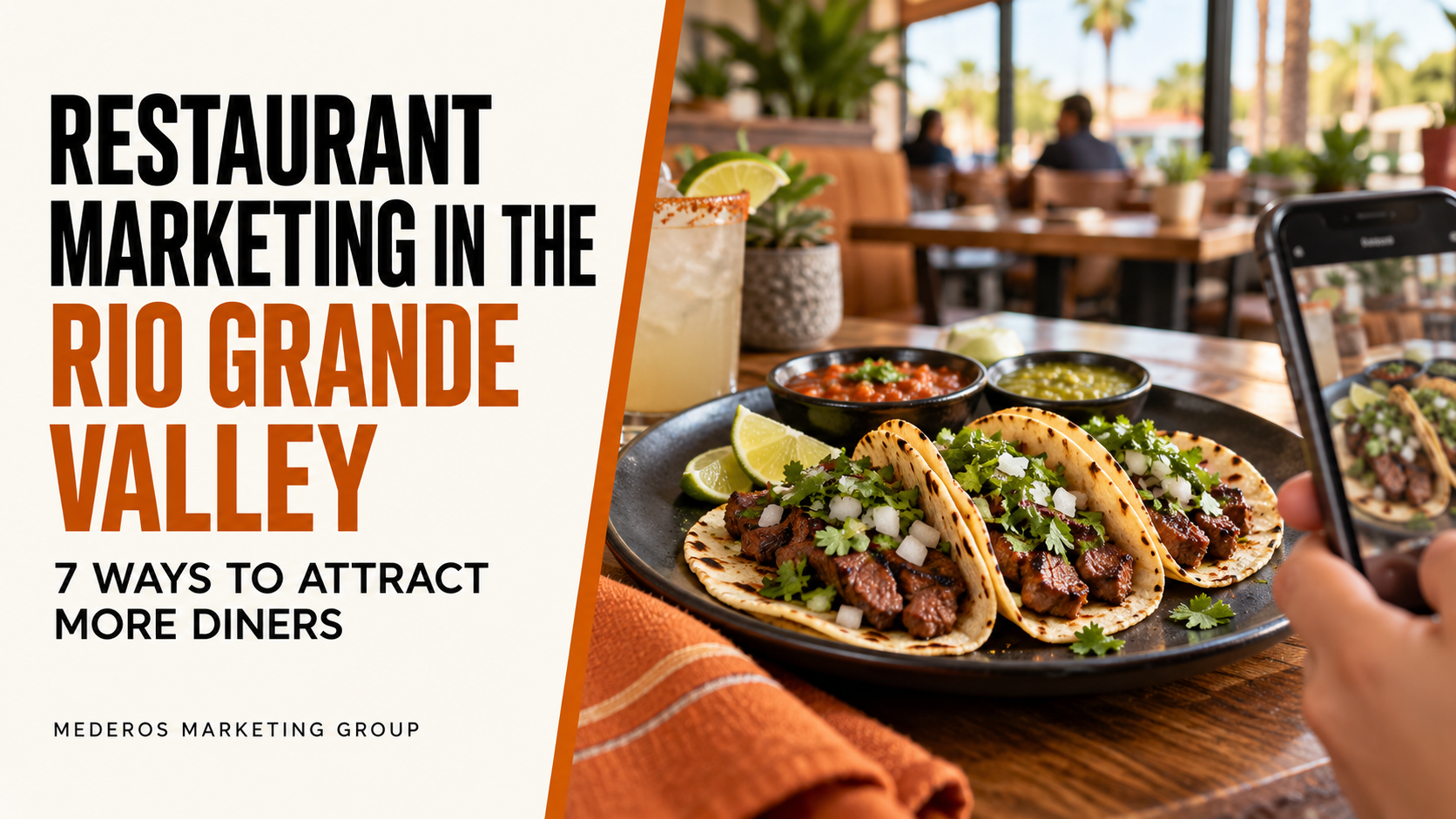

A customer sees your food on Instagram, opens your profile, and starts looking for a menu. Can they find current prices? Do they know where to park? Can they place an order without sending a message and waiting for a reply?
Those details deserve a place in your marketing plan.
Restaurant marketing in the Rio Grande Valley works best when discovery leads naturally to a visit, reservation, or order. A weekday lunch campaign in McAllen and a dinner promotion on South Padre Island can serve different occasions. The message, photos, and next step should reflect the experience you are selling.
Here are seven practical ways to build that connection.
1. Give customers accurate information on Google
Start by reviewing your Google Business Profile. Check your restaurant category, address, phone number, regular hours, holiday hours, and website link. A customer planning lunch needs information they can act on.
Google explains that local results depend mainly on relevance, distance, and prominence. Complete business information helps Google understand what you offer. Distance also matters, so visibility around your restaurant does not mean you will appear equally across the entire Valley.
For a restaurant in Brownsville, the practical priority is an accurate profile that clearly represents that location. If you operate several restaurants, keep each location’s information current.
Set a recurring reminder to check the profile whenever hours, menus, or ordering options change.
2. Make your menu easy to read and use
Open your website on your phone and try to choose a meal.
A useful menu should show item names, descriptions, current prices, and available ordering options. If your only menu is a blurry photo, replace it with a readable page. Keep a downloadable version as an additional option if customers use it.
Google also supports restaurant menu information and menu links on Business Profiles. Review what appears there so customers can find the current version.
Make the next step obvious. Use clear buttons such as “Order Pickup,” “View Menu,” or “Reserve a Table,” depending on what your restaurant actually offers.
For multiple locations, show customers which location will prepare their order before they reach checkout. Test the entire process yourself, including any handoff to an ordering provider.
3. Create food content that answers buying questions
Plan photography around decisions customers need to make.
A close-up can show the texture of a dish. A wider image can show the full plate and portion. A dining room photo can help someone picture the atmosphere, while an exterior photo helps them recognize the entrance.
Build a small collection covering your signature dishes, drinks, takeout packaging, dining space, and team. Use those images across your menu, website, social posts, and advertisements.
Give each video a clear purpose. Useful ideas include:
- What comes with your lunch combination.
- How a catering order is packaged.
- Which dishes are available for pickup.
- A walkthrough from the parking area to the entrance.
- The preparation of a signature item.
Include the dish name and a relevant next step in the caption. Keep the presentation faithful to what customers receive.
4. Build a campaign around one dining occasion
Choose a specific business goal before choosing an advertisement.
You might want more weekday lunch orders, catering inquiries, reservations, or pickup orders. Each goal calls for different information.
For example, a McAllen restaurant testing an office lunch campaign could feature its available meal packages, ordering deadline, pickup instructions, and a direct ordering link. That gives someone planning lunch a clear way to respond.
Google Search ads can reach people actively searching for relevant products or services. On Facebook and Instagram, test food photos or short videos that introduce the same offer and connect to the same destination.
Start with a promotion your kitchen can fulfill consistently. Review the cost of the offer, packaging, and any ordering fees before judging it by sales volume alone.
If customers regularly communicate with you in Spanish, consider a Spanish version of the campaign with matching information and service support.
5. Publish useful local content
Local content should help someone plan a visit or purchase.
An Edinburg restaurant offering catering could explain its ordering process, pickup arrangements, serving options, and lead times. A South Padre Island restaurant could explain reservation availability, parking, and how to find its entrance.
Those topics create useful opportunities to mention your location naturally.
Gather ideas from questions your staff already answers. If customers repeatedly ask whether you take large groups, offer outdoor seating, or provide catering utensils, make that information easy to find.
Keep details current. An old promotion or unavailable menu item can create confusion even when the post continues receiving attention.
6. Ask for honest reviews consistently
Make review requests a normal part of customer follow-up. A review link on a receipt or an optional QR code can give customers a convenient way to share their experience.
Keep the invitation neutral. Google prohibits incentives for reviews and selectively asking only for positive reviews. Customers should be free to describe their actual experience without pressure.
Read the feedback for operational lessons as well. Repeated comments about pickup confusion, inaccurate hours, or missing order instructions identify problems your team can address.
Respond professionally and move detailed order resolution into a private conversation.
7. Measure the actions that support restaurant sales
Choose a small set of measures that match your goal.
For a pickup campaign, review completed orders and order value. For catering, track inquiries, quotes, and confirmed bookings. For dine-in promotions, compare available reservation and sales information with the timing of the campaign.
Menu views, website visits, and direction requests can help explain customer interest, but they do not confirm that someone purchased.
Use a trackable ordering link or a clearly defined promotion when possible. Recognize that attribution will be incomplete, especially when people see an advertisement and later walk in.
Review the results alongside what happened in the restaurant: staffing, wait times, stock availability, and customer feedback.
Start with one manageable improvement
This month, update your Google information, fix your mobile menu, and choose one occasion to promote. Capture the content needed for that campaign and decide how you will evaluate it before launch.
A focused plan gives your team a clear offer to communicate and a result to learn from.
Build your restaurant marketing plan with MMG
Mederos Marketing Group helps Rio Grande Valley restaurants connect food photography, content creation, website design, local SEO, reputation management, and paid advertising.
Whether you need to improve how diners discover your restaurant or simplify the path to an order, we can help you identify the next steps.
Book a free 30-minute marketing strategy session to discuss your restaurant’s goals.